|


| |
|
|
hot or thermoelectric probe method





파일  hot or thermoelectric probe method.hwp
[Size :
885 Kbyte
]
hot or thermoelectric probe method.hwp
[Size :
885 Kbyte
]
hot or thermoelectric probe method.hwp
[Size :
885 Kbyte
]
분량 9 Page
가격 1,000 원
×
링크주소가 복사 되었습니다.
원하는 곳에 붙혀넣기 하세요
원하는 곳에 붙혀넣기 하세요
 카트
카트
|
 다운받기
다운받기
|
 네이버 ID로 다운 받기  카카오 ID로 다운 받기  구글 ID로 다운 받기  페이스북 ID로 다운 받기 |
 뒤로
뒤로
|
자료설명
hot or thermoelectric probe method에 대한 자료입니다.
halleffect
halleffect
본문/내용
1. hot or thermoelectric probe method (Seebeck effect)
(1) 원리
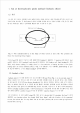
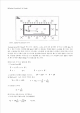
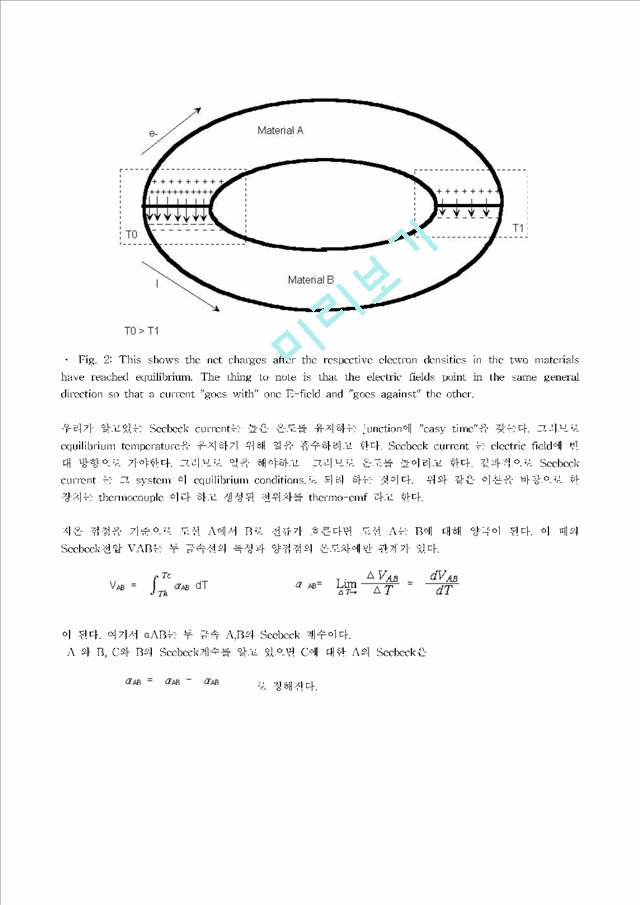
두 개가 서로 다르고 ,절연체가 아닌 물질이 있다고 한다. 어떤 두 개의 금속이나 반도체는 마치 그 두 물체가 같게 제공되고 두 번째 piece가 어떠한 영역에 갇히게 된다고 작용할 것이다. 만약, 유리가 막대나 wire 안에 있는 것들로 생각한다면 다음과 같이 도식화 할 수 있다.
Fig. 1: Two materials(could be in the shape of wires) joined at their ends. The junctions are where the interesting things happen.
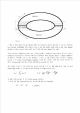
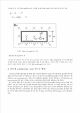
그리고, loop안에 전류가 흐르도록 하기 위해 약간의 battery을 삽입한다. 그 junctions중에 하나는 heat up하기 시작하고, 다른 junction은 cool down하기 시작한다. 이때 heating up은 Joule heating과는 무관하다.(well, almost nothing. In reality, there is a loss and thus a heating up that is from Joule heating but it is not the dominant effect.). 사실, 그 두 effects는 서로 무관하다. Joule heating 은 전류의 제곱에 비례한다. 그러면, Peltier heating은 전류에 비례한다.
(2) Seebeck effect
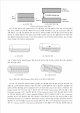
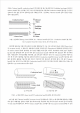
Seebeck effect는 두 개의 정점이 각기 다른 온도에서 (T0 and T1 in Fig. 1 on the previous page) 유지되는 하나의 루프 안에 두 개의 각기 다른 전도체가 결합되어 있을 때 전류가 생기는 것을 말한다. 두 개의 물체가 각각 다른 free electron densities를 갖고 있다…
Seebeck effect는 두 개의 정점이 각기 다른 온도에서 (T0 and T1…
Seebeck effect는 두 개의 정점이 각기 다른 온도에서 (T0 and T1…
| 📝 Regist Info |
|
I D : ndkh***** Date : 2015-03-28 FileNo : 16128823 |
Cart  | |

| |